Amplifying the Power of Digital Literacy Education
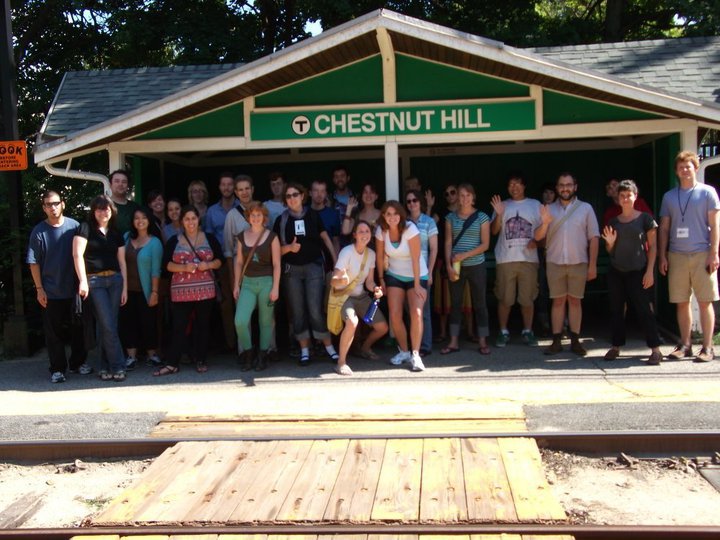
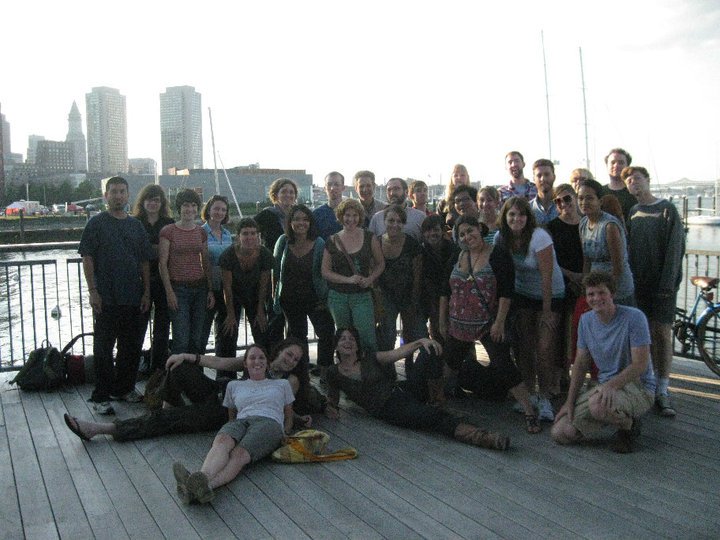
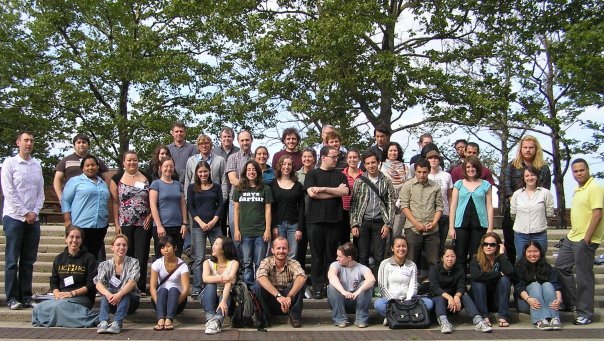
The Transmission Project is meeting the digital literacy education demands of the 21st century. According to the National Broadband Plan, “digital literacy refers to a variety of skills associated with using ICT [Information and Communications Technology] to find, evaluate, create and communicate information.” Moreover, the plan asserts, “digital literacy is a necessary life skill, much like the ability to read and write.” The Broadband Plan calls for capacity building of institutions that serve as digital literacy providers in their communities. The Transmission Project answers this call. For ten years it has recruited AmeriCorps*VISTA members into its Digital Arts Service Corps to build the capacity of community-based media and technology nonprofits.
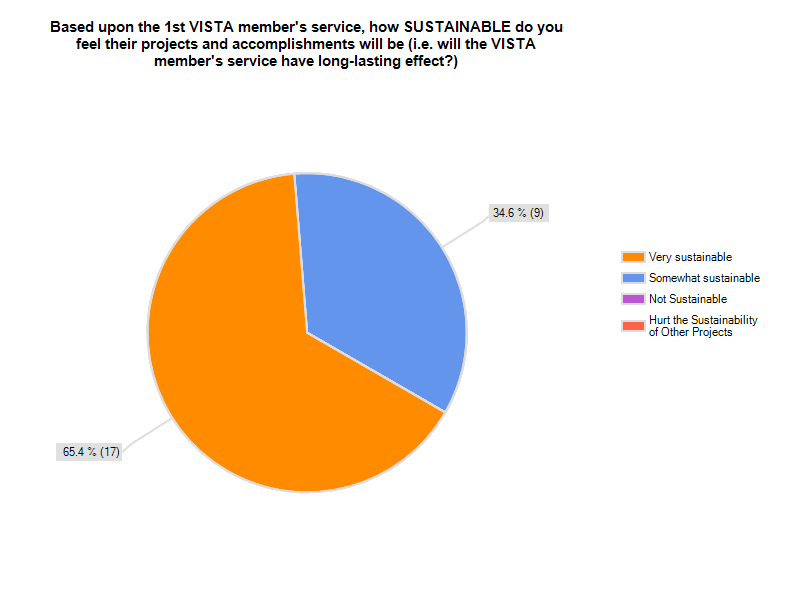
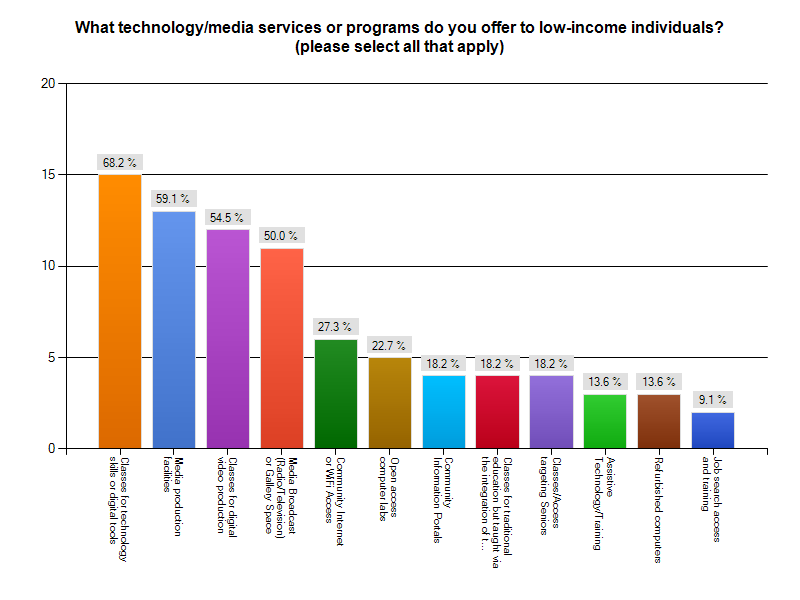
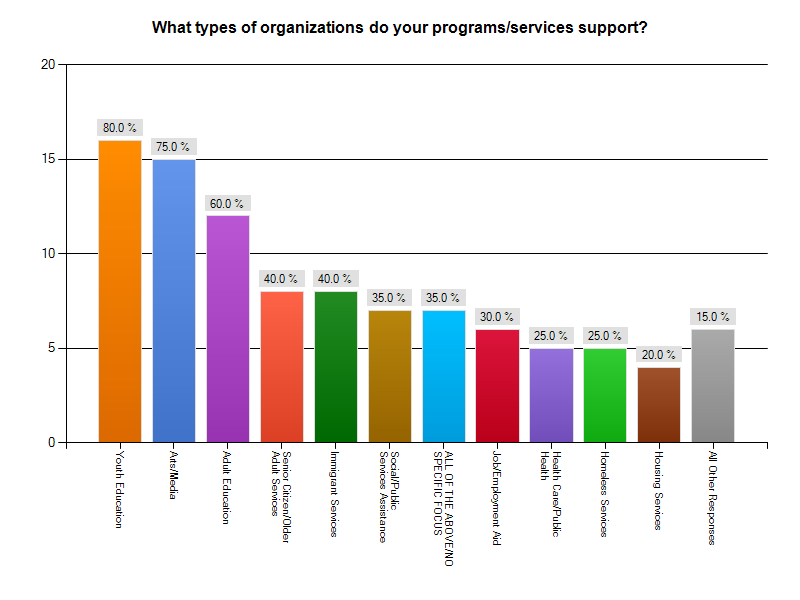
For underprivileged communities, digital literacy is a gateway to employment, economic opportunity, and health-care. The Transmission Project strengthens organizations that deliver quality education. The accompanying charts were created using data from a half-year survey of the Transmission Project’s partner organizations; they represent as snapshots of nonprofits’ impact over a six-month period. Organizations hosting a VISTA not only provided services to over 4,000 disadvantaged youth, but also assisted an estimated 2,458 other organizations, many of which also provide educational services. By building the capacity of the leaders in digital literacy education, the Transmission Project contributes to the number and extent of informed education efforts.
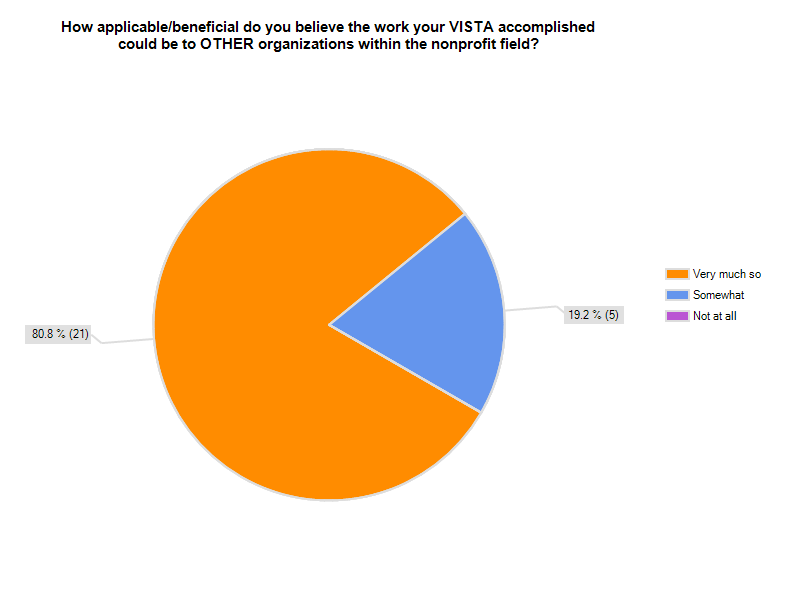
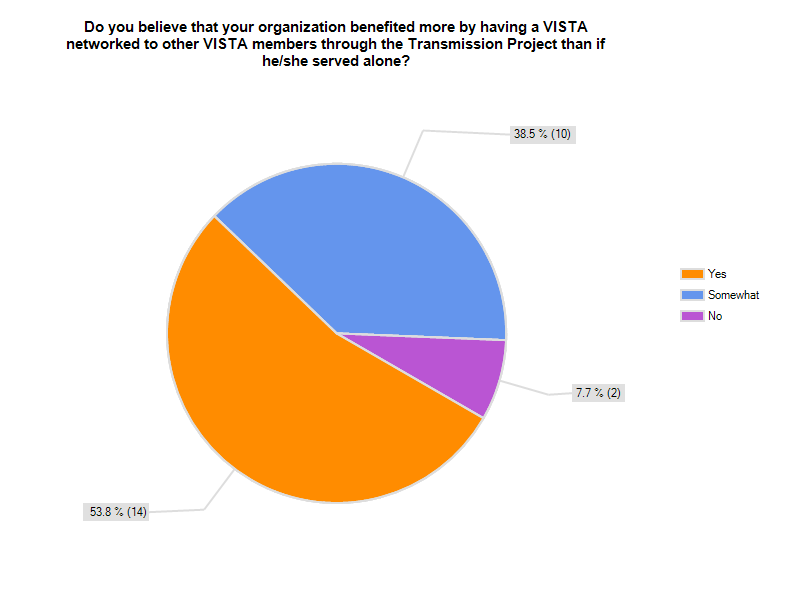
The Transmission Project maximizes the impact the addition of an AmeriCorps*VISTA member makes. Its impact is not only reflected in the innovative programming it supports; it also collects the methods, approaches, and tools its Service Corps develops and shares them with other VISTA members, VISTA leaders, and the nonprofit community at large on its resources page. (See video and pdf co-created by Corps VISTA leader Erica Jones.) Almost all respondents believed their VISTAs’ work to be highly applicable and beneficial to other organizations. Along the same lines, the majority of respondents believed they benefited more by hosting a VISTA networked to other VISTA members through the Transmission Project than if he or she served alone. The Transmission Project amplifies its impact by connecting the work of its Corps with a greater national effort.
Just as the Transmission Project gathers successful strategies, it also records the stories and background information of how they were implemented and how success was reached in the forms of articles and field reports written by VISTA members themselves. In the words of Joel Fleishman of the Urban Institute, one must be “open about successes and failures – not just to the extent of saying something failed and giving the evidence on the basis of which it did – but providing the blueprints of the things that succeeded so that people can build on them.” To be sure, the Project’s real innovation has been to think about story gathering as another type of data collection that can inform and improve its work and the work of others. The Transmission Project’s dedication to tangible results and narrative evaluation translates into sustainable improvements in education for the young people of our nation’s most vulnerable communities.
0 comments